
Join the Conversation
- Find Answers
- :
- Using Splunk
- :
- Splunk Search
- :
- Re: Why is Splunk gathering latest data even with ...
- Subscribe to RSS Feed
- Mark Topic as New
- Mark Topic as Read
- Float this Topic for Current User
- Bookmark Topic
- Subscribe to Topic
- Mute Topic
- Printer Friendly Page
- Mark as New
- Bookmark Message
- Subscribe to Message
- Mute Message
- Subscribe to RSS Feed
- Permalink
- Report Inappropriate Content
Why is Splunk gathering latest data even with Null values?

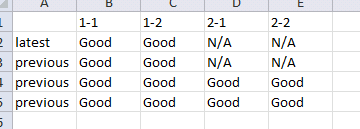
How can i get latest value of all ID (1-1,1-2,2-1,2-2). considering there are no latest data on ID(2-1,2-2)
Data:
12:10:01 ID 1-1, value="GOOD"
12:10:01 ID 1-2, value="GOOD"
12:10:02 ID 2-1, value="GOOD"
12:10:02 ID 2-2, value="GOOD"
12:10:03 ID 1-1, value="GOOD"
12:10:03 ID 1-2, value="GOOD"
12:10:04 ID 2-1, value="GOOD"
12:10:04 ID 2-2, value="GOOD"
12:10:05 ID 1-1, value="GOOD"
12:10:05 ID 1-2, value="GOOD"
12:10:06 ID 2-1, value="GOOD"
12:10:06 ID 2-2, value="GOOD"
12:10:07 ID 1-1, value="GOOD"
12:10:07 ID 1-2, value="GOOD"
12:10:08 ID 1-1, value="GOOD"
12:10:08 ID 1-2, value="GOOD"
- Mark as New
- Bookmark Message
- Subscribe to Message
- Mute Message
- Subscribe to RSS Feed
- Permalink
- Report Inappropriate Content

I'm assuming your fields are extracted properly, so that "ID" and "value" are both extracted. You can retrieve the last value for each ID using the stats command latest:
[Your search string to find the events] | stats latest(value) by ID
This will give you a table of IDs and the latest value field for each. You can read more about stats here:
https://docs.splunk.com/Documentation/Splunk/latest/SearchReference/Stats



Join the Splunk Community Slack to learn, troubleshoot, and make connections with fellow Splunk practitioners in real time!
Join Splunk User Groups to connect and learn in-person by region or remotely by topic or industry.
How much can you really learn in 3 minutes?
Event Series: The Agentic SOC: Trust Before Autonomy
Free Professional Services for .conf26 Attendees
