
Turn on suggestions
Auto-suggest helps you quickly narrow down your search results by suggesting possible matches as you type.
Splunk Search
×
Join the Conversation
Without signing in, you're just watching from the sidelines. Sign in or Register to connect, share, and be part of the Splunk Community.
- Find Answers
- :
- Using Splunk
- :
- Splunk Search
- :
- Multivalue input choice box length css
Options
- Subscribe to RSS Feed
- Mark Topic as New
- Mark Topic as Read
- Float this Topic for Current User
- Bookmark Topic
- Subscribe to Topic
- Mute Topic
- Printer Friendly Page
- Mark as New
- Bookmark Message
- Subscribe to Message
- Mute Message
- Subscribe to RSS Feed
- Permalink
- Report Inappropriate Content

D2SI
Communicator
08-29-2019
01:35 AM
Hello there!
I am looking for a way to adjust multivalue choice box length to keep them on one line.
I have already adjusted multivalue input box :

 <html>
   <style>
     #instance_id {
     width: 50%;
     }
   </style>
 </html>
But I do have long string choices that get displayed on two lines (#2), so I am trying to adjust box choices length to have something like this (#3):
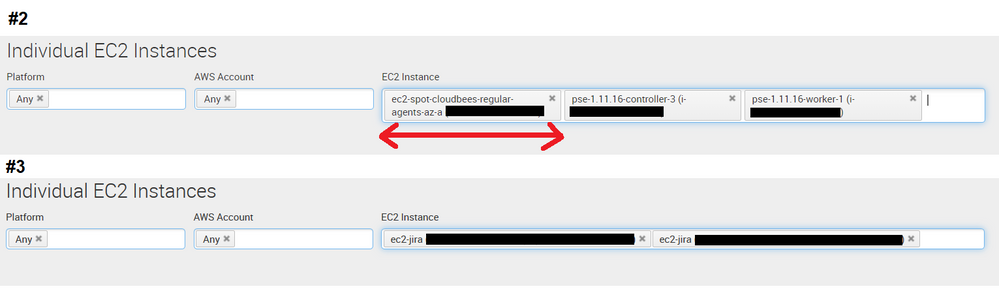
Is there a way using css / simple xml?
Thanks in advance for any hint!
1 Solution
- Mark as New
- Bookmark Message
- Subscribe to Message
- Mute Message
- Subscribe to RSS Feed
- Permalink
- Report Inappropriate Content
thomasroulet
Path Finder
08-29-2019
04:37 AM
Hello,
if you are using a splunk version> = 7 and <= 7.1 (I only tested on version 7.0.1, a Splunk Web UI update has been updated to version 7.1)
you could try to add this part of css:
#instance_id .select2-search-choice {
    max-width: none !important;
}
- Mark as New
- Bookmark Message
- Subscribe to Message
- Mute Message
- Subscribe to RSS Feed
- Permalink
- Report Inappropriate Content
thomasroulet
Path Finder
08-29-2019
04:37 AM
Hello,
if you are using a splunk version> = 7 and <= 7.1 (I only tested on version 7.0.1, a Splunk Web UI update has been updated to version 7.1)
you could try to add this part of css:
#instance_id .select2-search-choice {
    max-width: none !important;
}
- Mark as New
- Bookmark Message
- Subscribe to Message
- Mute Message
- Subscribe to RSS Feed
- Permalink
- Report Inappropriate Content
D2SI
Communicator
08-29-2019
05:23 AM
Great thanks!




Got questions? Get answers!
Join the Splunk Community Slack to learn, troubleshoot, and make connections with fellow Splunk practitioners in real time!
Meet up IRL or virtually!
Join Splunk User Groups to connect and learn in-person by region or remotely by topic or industry.
Get Updates on the Splunk Community!
Self-Healing Pipeline Is Now Generally Available: AI-Powered CIM Compliance
Maintaining data integrity across security and analytics pipelines is an ongoing challenge. Data ...
Meet Splunk Observability Studio: AI-Assisted OpenTelemetry Instrumentation Without ...
Instrumentation is usually the last step or even an afterthought when building out a project. The feature ...
Federated Search for Cisco Security and Analytics Logging (SAL) is now GA on Splunk ...
Federated Search for Cisco Security Analytics and Logging (SAL) is now generally available as part of the ...
