
Turn on suggestions
Auto-suggest helps you quickly narrow down your search results by suggesting possible matches as you type.
Dashboards & Visualizations
×
Join the Conversation
Without signing in, you're just watching from the sidelines. Sign in or Register to connect, share, and be part of the Splunk Community.
- Find Answers
- :
- Using Splunk
- :
- Dashboards & Visualizations
- :
- How to reset tokens upon clicking submit button
Options
- Subscribe to RSS Feed
- Mark Topic as New
- Mark Topic as Read
- Float this Topic for Current User
- Bookmark Topic
- Subscribe to Topic
- Mute Topic
- Printer Friendly Page
- Mark as New
- Bookmark Message
- Subscribe to Message
- Mute Message
- Subscribe to RSS Feed
- Permalink
- Report Inappropriate Content
How to reset tokens upon clicking submit button

twishtrisha
Loves-to-Learn Lots
07-28-2020
06:54 AM
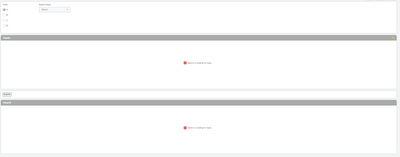
I'm having trouble with my code. My goal is when I click A in the radio button, it would show up a list of values under A and there's a checkbox per row...Upon clicking a checkbox, it should show on Panel B. (I have that one sorted out)
My problem is, when I pick B in the radio button, and a list shows up in the Details panel, everything I clicked on A and B will show up. I only need B to show up. I need help to reset whenever I click a new radio button and hit submit. I don't know where to reset it though. Thank you in advance!
require([
    'underscore',
    'jquery',
    'splunkjs/mvc',
    'splunkjs/mvc/tableview',
    'splunkjs/mvc/simplexml/ready!'
], function (_, $, mvc, TableView) {
    // Access the "default" token model
    var tokens = mvc.Components.get("default");
    var selected_values_array = [];
    var submittedTokens = mvc.Components.get('submitted');
    console.log("This is Multi-select table JS");
    // Custom renderer for applying checkbox.
    var CustomRenderer = TableView.BaseCellRenderer.extend({
        canRender: function (cell) {
            return _(['Select server']).contains(cell.field);
        },
        render: function ($td, cell) {
            var a = $('<div>').attr({
                "id": "chk-server" + cell.value,
                "value": cell.value
            }).addClass('checkbox').click(function () {
                if ($(this).attr('class') === "checkbox") {
                    selected_values_array.push($(this).attr('value'));
                    $(this).removeClass();
                    $(this).addClass("checkbox checked");
                } else {
                    $(this).removeClass();
                    $(this).addClass("checkbox");
                    var i = selected_values_array.indexOf($(this).attr('value'));
                    if (i != -1) {
                        selected_values_array.splice(i, 1);
                    }
                }
                console.log(selected_values_array);
            }).appendTo($td);
        }
    });

    //List of table ID
    var sh = mvc.Components.get("myTable");
    if (typeof (sh) != "undefined") {
        sh.getVisualization(function (tableView) {
            // Add custom cell renderer and force re-render
            tableView.table.addCellRenderer(new CustomRenderer());
            tableView.table.render();
        });
    }

    $(document).ready(function () {

        //setting up tokens with selected value.
        $("#mybutton").on("click", function (e) {
            e.preventDefault();
            tokens.set("mytoken", selected_values_array.join());
            submittedTokens.set(tokens.toJSON());
        });

    });
});
Got questions? Get answers!
Join the Splunk Community Slack to learn, troubleshoot, and make connections with fellow Splunk practitioners in real time!
Meet up IRL or virtually!
Join Splunk User Groups to connect and learn in-person by region or remotely by topic or industry.
Get Updates on the Splunk Community!
Index This | What travels the world but is also stuck in place?
April 2026 Edition
Hayyy Splunk Education Enthusiasts and the Eternally Curious!
We’re back with this ...
Discover New Use Cases: Unlock Greater Value from Your Existing Splunk Data
Realizing the full potential of your Splunk investment requires more than just understanding current usage; it ...
Continue Your Journey: Join Session 2 of the Data Management and Federation Bootcamp ...
As data volumes continue to grow and environments become more distributed, managing and optimizing data ...
