
Join the Conversation
- Find Answers
- :
- Using Splunk
- :
- Dashboards & Visualizations
- :
- Re: Hide Splunk Bar in Account Settings
- Subscribe to RSS Feed
- Mark Topic as New
- Mark Topic as Read
- Float this Topic for Current User
- Bookmark Topic
- Subscribe to Topic
- Mute Topic
- Printer Friendly Page
- Mark as New
- Bookmark Message
- Subscribe to Message
- Mute Message
- Subscribe to RSS Feed
- Permalink
- Report Inappropriate Content
Hide Splunk Bar in Account Settings

Hi everyone,
I created in the app navigation bar one option that allows the user change the password as follows:
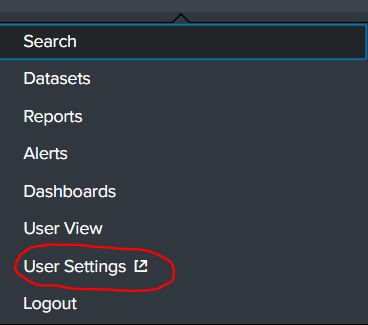
That option leads to "Account Settings" view, and the thing is I don't want the user can see the Splunk bar in that view.
Is there any way to hide the Splunk bar in that view and only for the app I'm creating?
Thanks for everything.
- Mark as New
- Bookmark Message
- Subscribe to Message
- Mute Message
- Subscribe to RSS Feed
- Permalink
- Report Inappropriate Content
After trying , the only thing that works in Splunk version 7.2 is adding ?hideSplunkBar=true at the end of the URL:
- http://localhost:8000/en-US/manager/myapp/authentication/changepassword?hideSplunkBar=true
I need to know if it's possible something similar in splunk previous versions.
- Mark as New
- Bookmark Message
- Subscribe to Message
- Mute Message
- Subscribe to RSS Feed
- Permalink
- Report Inappropriate Content

HI,
try
.appHeader {
display: none;
}
or
.navbar {
display: none;
}
in your_app/appserver/static/dashboard.css:
- Mark as New
- Bookmark Message
- Subscribe to Message
- Mute Message
- Subscribe to RSS Feed
- Permalink
- Report Inappropriate Content


No, the account settings aka “changepassword” view is a static view that takes you into a completely different app context.
You’ll have to hack css and maybe js as well to do this, and that would be unsupported. It would also have to be reimplemented every time you upgrade or reinstall splunk.



Join the Splunk Community Slack to learn, troubleshoot, and make connections with fellow Splunk practitioners in real time!
Join Splunk User Groups to connect and learn in-person by region or remotely by topic or industry.
A Four-Part Event Series: Full Stack Observability For the AI Era
SOC4Kafka - New Kafka Connector Powered by OpenTelemetry
Event Series: Level up your SOC: Advancing with Splunk Enterprise Security
